


| Dental Podcast Episode - The Dr. Phil Klein Dental Podcast | Listen on: |
|

|

|

|
and others. |
Episode 368: Bonding Simplification with Direct and Indirect Restorations
 |
Disclaimer
Viva Learning LLC sites offer content that include opinions, techniques, recommendations, etc. from a variety of writers and speakers that are not necessarily endorsed by Viva Learning LLC, its associates and sponsored Viva Affiliates. Viewers are responsible for verifying the validity, accuracy and relevance of all content before implementing any techniques, products or recommendations into their clinical setting. Viewers understand that Viva Learning LLC, its associates, writers, speakers and sponsored Viva Affiliates are not in any way responsible or liable for any adverse events that may occur (i.e., in a clinical setting or anywhere) based on any information disseminated from Viva Learning LLC sites, including all Viva Learning sites.
The copyrights and other rights to the slides and video contained in a webinar posted on this website are owned by the speaker, Viva Learning LLC, and/or the sponsor company and/or its subsidiaries worldwide. Viewers are only authorized to view the content of the webinar (live and archive) at this Website and are not permitted to screen capture, record and/or download any content displayed in this webinar. You may not make any part of this Website available as part of another web site whether by hyperlink framing on the Internet or otherwise.
The copyrights and other rights to the audio contained in a Viva Podcast are owned by Viva Learning LLC. Viewers are authorized to listen to the content of the podcast and are permitted to download any podcast for personal use only. You may not, however, make any part of this Website available as part of another web site whether by hyperlink framing on the Internet or otherwise.
By signing up for a free webinar and/or podcast you give Viva Learning LLC and/or its Viva Learning Affiliates permission to send you emails alerting you to future CE opportunities and e-learning content.
California State Dental Board Provider Statement
Viva Learning is a registered continuing education provider in the state of CA. Dental Board of CA Provider #RP 5747. Approved through 6/30/2026
Questions regarding our Conditions of Usage, Privacy Policy, or other policy related material can be directed to our support staff by clicking on the "Support" link or you can email us at: support@vivalearning.com.
Approval does not imply acceptance by any regulatory authority or AGD endorsement.
Approval period: 11/1/2025 - 10/31/2029. AGD Provider # 217544
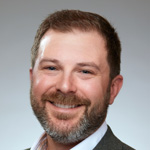
Presenter Information: Dr. Todd Snyder
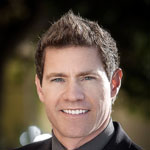 |
Dr. Todd C. Snyder received his doctorate in dental surgery at the University of California at Los Angeles School of Dentistry. Dr. Snyder has learned from and worked under some of the most sought after leaders in dentistry, refining his skills in comprehensive, extremely high quality aesthetic dentistry and full mouth rehabilitation. Furthermore he has trained at the prestigious F.A.C.E. institute for complex gnathological (functional) and temporomandibular joint disorders (TMD). Dr. Snyder lectures both nationally and internationally on numerous aspects of dental materials, techniques, and equipment. Dr. Snyder has been on the faculty at U.C.L.A. in the Center for Esthetic Dentistry where he co-developed and co-directed the first and only comprehensive 2-year postgraduate program in aesthetic and contemporary restorative dentistry. He currently is on the faculty at Esthetic Professionals. Additionally, Dr. Snyder is a consultant for numerous dental manufacturing companies and has had the opportunity to research and recommend changes for many of the materials now being used in dentistry. Dr. Snyder has authored numerous articles in dental publications and published a book on contemporary restorative and cosmetic dentistry. Dr. Snyder also founded and is CEO of Miles To Smiles a non-profit mobile children’s charity that helps indigent and underprivileged children. |
Viva Learning is an approved AGD PACE Provider and California State Dental Board Provider of dental continuing education. Viva Learning strives to deliver balanced, objective and clinically relevant information grounded on scientific research. Lecturers who are invited to deliver Viva CE webinars are advised to substantiate their claims with research-supported data and to disclose all commitments to, or relationships with, any commercial entity within the dental industry. In many cases, lecturers are sponsored by a dental manufacturing company, which provides them with support in the form of honorarium and/or dental products and equipment in order to help with clinical presentations. Prior to each live CE webinar, lecturers are made aware of the importance of delivering their presentations without commercial bias, and where appropriate, to mention a variety of different product choices that may be relevant to the subject matter of the lecture, for the educational benefit of the participant.
Transcript
Welcome to the show. I'm Dr. Phil Klein. Today we'll be discussing methods and materials that
will help us simplify our bonding procedures with our direct and indirect restorations. Our guest
is Dr. Todd Snyder, a popular speaker on VivaLearning.com, a cosmetic dentist, author,
international lecturer, researcher, and instructor at various teaching facilities. Dr.
Snyder is a consultant for numerous dental manufacturing companies and has had the opportunity to
research and recommend changes for many of the materials now being used in dentistry. You can reach
Dr. Snyder at www.legion.dentist. Before we get started,
I do want to mention that Dr. Snyder has an excellent webinar on vivolearning.com titled
Fundamentals to Delivering Indirect Ceramic Restorations. Simply go to vivalearning.com,
type in the search box Snyder, S-N-Y-D-E-R, and you'll find that webinar.
Dr. Snyder, it's a pleasure to have you back on Dental Talk. Thanks so much, Bill. So dental
offices in general are always trying to minimize their overhead expenditures. And with all the
restorative materials available, what can an office do to help minimize costs on all their
materials and inventory? Well, obviously, you know, as expensive as materials are, you want to
streamline your systems. And so, you know, talking about systems quite regularly in many of our
podcasts and whatnot, one of the systems I would look at is obviously how you order, you know,
who's doing the ordering, what they're ordering, and where do you have overlap or where do you have
similar products that you've been using as separate entities? where maybe there's some kind of
newer product that does more of many different types of procedures versus having individualized
products. And so we're seeing that more and more with different manufacturers coming out with
various types of products that do overlap. So you don't have to have as much inventory as you once
did to maintain all the direct and indirect type of restorative procedures we do. With the
advancements of these new materials, and there's some consolidation in the chemistry so that... we
can minimize inventory complexities. That also probably saves some money on the materials
themselves because you don't have to worry about throwing out a third of your inventory because the
shelf life's gone, but also the learning curve on these operatory trays and delivery systems.
yeah you hit it right on the head you know because a lot of times in systems we have to have like
three or four bottles and if you got three or four bottles in every room and you know now you're
looking at expiration dates of each one and certain ones have to be replaced you know in certain
rooms and you're going like my gosh i'm trying to juggle all these different bottles and
expirations and everything it's like can't we simplify it and find a system where it's like one
bottle or two bottles to make life easier And so they've done that with many of like, let's say,
the newer universal bonding agents where you can have literally one bottle for everything from
direct to indirect. So depending on how you want to use it, there's a system easier and manageable
for your employees and the systems in your practice. Now, when we're talking about bonding agents
for this podcast, suppose you find a bonding agent from a company that, and I know you do a lot of
evaluations with some of these manufacturers and you find one that you really like. Does it matter
if it's not part of the same system and made from a different manufacturer than the actual
restorative product itself? You know, you bring up a great point. So if we were talking about
direct restorations, you know, obviously composites. You can use anybody's bonding agent for your
composite directly. But as soon as you start moving into an indirect type of procedure where you're
having some brand of dual-cure resin, now you have some potential issues with different
manufacturers. Their chemistry is unique to them. It doesn't necessarily work with a different
manufacturer. And that's where you have problems. So me personally, to keep things simple, what I
tell most dentists is, hey, look, if you want a system for both direct and indirect, then you
typically want to stay within one manufacturer's product line so you don't have problems or you can
use let's say buy the brand that you like for your indirect restorations and know that typically
that one can be used for any of your direct so really it's your indirect that kind of dictates what
system you use Okay, that's a very good point. So in your office, any suggestions that you could
give our audience about what you like, what you prefer, what you've gone through, what you've
evaluated? Certainly. Yeah. And so obviously as an evaluator for reality and for many of the
manufacturers and used to be with Catapult and evaluating products for them, you know, it really
boils down to a personal preference to some extent. Me, I want a bonding agent that I can use for
anywhere in the mouth, total etch, self etch, selective etch, direct, indirect. And I want one
bottle to do everything because I want to keep my, as you said, that tray system. I only want one
bottle there. I don't have to have numerous bottles we're looking at. So I like Bisco personally. I
like their Albon Universal. It doesn't require a dual cure activator. Really will do everything I
want in the mouth for directs and indirects. And again, etch, total etch, self etch, selective
etch. It has a low film thickness at approximately eight microns. So if I'm doing indirect
restorations and I cure it. before i seat my ceramic i know that if i've done things properly it's
a thin enough film thickness it's not going to keep my restoration from seating properly so it
really does everything for me and as someone who has access to all of them that's the one i like
that works in my hands very well yeah now i am familiar with bisco as a company they do have good
technical support there so there are doctors and researchers that are available to talk to
clinicians that are having possibly some issues debonding issues or potential failures with some of
these things that they're doing, and they could actually reach out to Bisco. And I think it's
important to have a relationship with the manufacturer of those products that we're talking about,
especially since things are changing and evolving so quickly. Yeah, no, I definitely agree. And
they have a great support staff over there, especially Rolando, he's a dentist, and you can get all
kinds of great information from them. But one of the main things I like about the company, because
there's plenty of great bonding agents out there, don't get me wrong. But for the most part, VSCO
makes one type of product. They make an adhesive and a resin, a light cure or dual cure resin for
the most part. They don't have a huge product line of many different things. They focus on doing
one thing extremely well is kind of how I would look at it. I know we've talked about etching
before, selective etch, self etch, total etch. Where are you in your practice with these different
etching techniques? You know, every case is different. So for me, obviously, if I have a bunch of
enamel. you know, if I'm doing like a facial bonding or veneer or something, I have enamel, I'm
going to etch that. I'm a big fan of total etch on enamel. Where I have dentin, you know,
the research would say that, you know, self-etch is doing a better job long term. So I'm
personally a fan of that. Now, if I have a mixture where I'm doing, like, say, a class two, and I
have an enamel cable surface margin, and then I've got dent, and I will try and put a thick etching
material, which Bisco sells, I hate to say it again, but Bisco sells a really nice etchant called
HV etch, which stays where you put it. So I'll use that for my selective etch.
So I'm trying to maintain etchant only on the enamel, but, you know. Kind of hard not to get a
little bit on the dentin. So if it does, that's fine. If someone's still a fan of doing etchant on
the whole tooth and amyl and dentin combined, there is nothing wrong with that. We've been doing
that for years. Is there a slight advantage potentially by not etching the dentin? Yeah.
Now, there's a bigger difference when you start talking about technique. If one doesn't have a good
technique, it doesn't matter if you're etching the dentin or not because your technique's off. So
the main thing is, do I have a system that's forgiving enough? that allows me to get a good bond
regardless if I'm etching or not etching on the dentin. You know, that's kind of how I look at it.
So a universal system nowadays gives you that affordability of, you know, a little bit of air in
your technique. So as we wrap up this podcast, Dr. Snyder, tell us what you think the most common
mistake a dentist makes in his bonding technique. that is most detrimental to the long-term
clinical success of the case. You know, from all the hands-on and testing we've done with dentists
coming in and actually doing bond strength studies, I find is that most dentists don't spend the
time to put enough adhesive onto the tooth. In other words, you know, they put like one tiny drop
to try and save some money and scrub one little drop in and think that's going to be enough. You
really need to apply multiple drops onto the tooth. you know, from your micro brush and scrubbing
that in and let it really work on the tooth. You're just scrubbing it, moving it in, applying it to
the tooth for a good like 20 seconds and allowing it to soak in and dissipate because when that
bonding agent is going onto the tooth, it's acidic. And so the second it touches the tooth, it's
going to start to neutralize. And so you can't expect that to continue to work everywhere on the
tooth. You have to put multiple applications so you maintain that acidity so it can do its magic.
And then you finally get to evaporate off the volatile solvents and all that extra. Yeah, and
that's probably laid out well in the DFU for these products, which many of us don't read. And I
guess the moral of the story is you may be trying to save a few seconds here and there by not doing
exactly what you just described, but in the long run, it's going to cost you, right? Because if you
have a failure, we know what a redo costs. We've gone through that before. All right, well, Dr.
Snyder, great podcast. Thank you very much. And I know you're going to be on soon with another one,
and that's going to be... Adhesive cement versus bioactive cement, when and why. So that will be
interesting. Thanks very much, Dr. Snyder. Thank you.
 Episode 793. Mastering Porcelain Veneers: From Digital Wax-Up to Post-Insertion Visit
8/10/2026 - CE Credits: 0.5 CEU (Take Exam)
Episode 791. The Latest in Composite Dentistry: Universal Composites, Bonding & Clinical Pearls
8/3/2026 - CE Credits: 0.5 CEU (Take Exam)
Episode 736. Doing More with Less: Restoring the ‘Hopeless’ Tooth with Composite
1/19/2026 - CE Credits: 0.5 CEU (Take Exam)
Episode 726. The Power of Passion and a Great Mentor: A Young Dentist’s Rise to Fee-for-Service Success
12/8/2025 - CE Credits: 0.5 CEU (Take Exam)
Episode 723. Clear Aligners in General Dentistry: Opportunities and Challenges
11/24/2025 - CE Credits: 0.5 CEU (Take Exam)