








| Dental Podcast Episode - The Dr. Phil Klein Dental Podcast | Listen on: |

|

|

|

|
and others. |
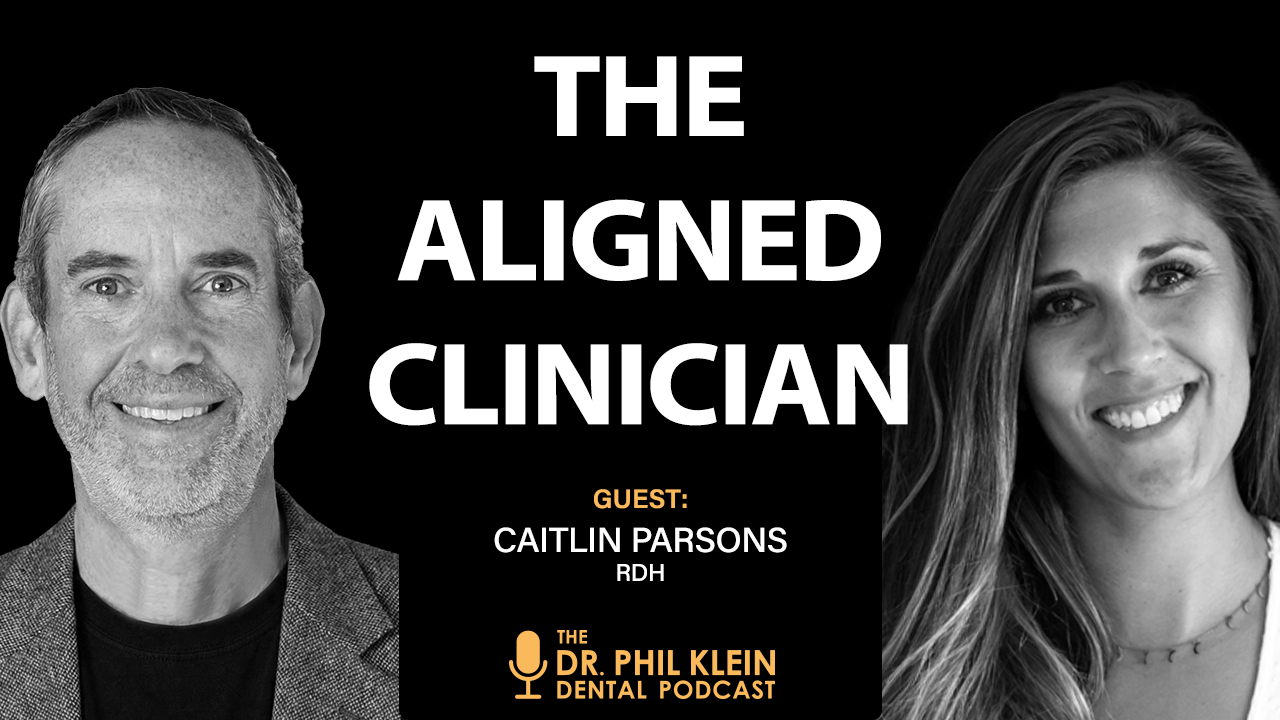
Episode 818: The Aligned Clinician: Mind, Body, and Dentistry in Harmony
 |
Disclaimer
Viva Learning LLC sites offer content that include opinions, techniques, recommendations, etc. from a variety of writers and speakers that are not necessarily endorsed by Viva Learning LLC, its associates and sponsored Viva Affiliates. Viewers are responsible for verifying the validity, accuracy and relevance of all content before implementing any techniques, products or recommendations into their clinical setting. Viewers understand that Viva Learning LLC, its associates, writers, speakers and sponsored Viva Affiliates are not in any way responsible or liable for any adverse events that may occur (i.e., in a clinical setting or anywhere) based on any information disseminated from Viva Learning LLC sites, including all Viva Learning sites.
The copyrights and other rights to the slides and video contained in a webinar posted on this website are owned by the speaker, Viva Learning LLC, and/or the sponsor company and/or its subsidiaries worldwide. Viewers are only authorized to view the content of the webinar (live and archive) at this Website and are not permitted to screen capture, record and/or download any content displayed in this webinar. You may not make any part of this Website available as part of another web site whether by hyperlink framing on the Internet or otherwise.
The copyrights and other rights to the audio contained in a Viva Podcast are owned by Viva Learning LLC. Viewers are authorized to listen to the content of the podcast and are permitted to download any podcast for personal use only. You may not, however, make any part of this Website available as part of another web site whether by hyperlink framing on the Internet or otherwise.
By signing up for a free webinar and/or podcast you give Viva Learning LLC and/or its Viva Learning Affiliates permission to send you emails alerting you to future CE opportunities and e-learning content.
California State Dental Board Provider Statement
Viva Learning is a registered continuing education provider in the state of CA. Dental Board of CA Provider #RP 5747. Approved through 6/30/2026
Questions regarding our Conditions of Usage, Privacy Policy, or other policy related material can be directed to our support staff by clicking on the "Support" link or you can email us at: support@vivalearning.com.
Approval does not imply acceptance by any regulatory authority or AGD endorsement.
Approval period: 11/1/2025 - 10/31/2029. AGD Provider # 217544
Presenter Information: Caitlin Parsons, RDH
 |
With 15 years under her belt as a practicing Dental Hygienist, Caitlin Parsons is the proud founder of The Aligned Hygienist. Her struggle with pain transformed into her driving purpose, fueling Caitlin's dedication to the well-being of dental professionals. As a public speaker, writer, and the host of The Aligned Hygienist Podcast, she actively share her insights and experiences. Furthermore, as a Key Opinion Leader, content creator, influencer, and ergonomics advisor for dental products and brands, Caitlin continues to advocate for the health and well-being of dental professionals everywhere. |
Viva Learning is an approved AGD PACE Provider and California State Dental Board Provider of dental continuing education. Viva Learning strives to deliver balanced, objective and clinically relevant information grounded on scientific research. Lecturers who are invited to deliver Viva CE webinars are advised to substantiate their claims with research-supported data and to disclose all commitments to, or relationships with, any commercial entity within the dental industry. In many cases, lecturers are sponsored by a dental manufacturing company, which provides them with support in the form of honorarium and/or dental products and equipment in order to help with clinical presentations. Prior to each live CE webinar, lecturers are made aware of the importance of delivering their presentations without commercial bias, and where appropriate, to mention a variety of different product choices that may be relevant to the subject matter of the lecture, for the educational benefit of the participant.
Transcript
moment with the patient, typically our breath is faster, it's more shallow, it's typically up in
our chest, right? So just by becoming aware of our breath or by slowing our breath down,
we can help shift our body from that spiked sympathetic state into a parasympathetic state.
Welcome to Austin, Texas, and welcome to the Dr. Phil Klein Dental Podcast. Before we jump into today's
conversation, we've got a quick favor to ask. If you're enjoying the show, hit that follow button,
whether it's Apple, Spotify, or whatever platform you use. And if you really want to help us out,
leave us a review. It only takes a minute, but it makes a big difference. It helps us reach more
dental professionals, bring you more incredible guests, and keep the conversations coming. We
really do appreciate it. On today's episode, we're addressing a topic that goes beyond posture and
positioning. It's about alignment. What does it truly mean to be an aligned practitioner, not just
physically, but mentally and emotionally? Our guest, Caitlin Parsons, is a practicing registered
dental hygienist with over 15 years of experience, a certified yoga therapist, and an ergonomics
consultant who helps dental professionals reconnect with their bodies and prevent burnout.
We'll explore how energy awareness and body-mind connection influence the way we show up for our
patients, the subtle signs that we might be out of alignment, and how yoga therapy tools can help
us regulate stress and restore balance. Caitlin also shares a powerful personal story about a time
she experienced realignment in her own career and how that moment reshaped her approach to
dentistry and wellness. Plus, we'll talk about simple ways clinicians can integrate mindfulness and
movement into their workday and why Caitlin believes alignment, not perfection,
is the real key to longevity in dentistry. Caitlin, it's a pleasure to have you on the show.
Thank you for having me. I'm excited to be here. So you're all about alignment. You have a website
called thealignedhygienist.com. So tell us the importance of alignment and what that all means in
terms of practicing dentistry. Yeah, this is a topic I'm passionate about and mostly from my own
experience from dentistry. Alignment to me means balance in our body and our mind and our energy.
And we know that dentistry can be extremely challenging physically, mentally draining,
and it can be emotionally and energetically. taxing as well so it's really balancing and creating
more harmony in our body and mind and energy so that when we show up for our patients we're more
presence we're again more grounded more focused on our patients and being in the moment rather than
thinking about the thousand other things going on So if you would, Caitlin, talk to us about the
body-mind connection. We've heard that term many times. Many of us have an idea of what that
means, but also talk to us about our energy awareness. What does that mean,
energy awareness, in terms of how we show up for our patients? Yeah,
well, I know, energetic awareness. People... probably think this is a little bit woo,
even just this conversation, but it really is important because the way that we show up with our
patients, even just the look on our face or the, we might say the vibe or the feeling that we're
putting off outside of what we're even saying in our body's posture, when we see even a new
patient, that makes a big difference. So mind-body connection is...
really important, really powerful. I feel like it's becoming more common to talk about, but being
connected to your body and mind and the way that you're showing up.
So being aware of your physical body, anything that's going on in your body,
your posture, the way you're holding your body and your body's position. Our mind, obviously,
being present with our patients, not thinking about the other things.
But I will say, I'll tell you what you're saying and everything you're talking about, which is the
vibe, that is so important for case acceptance. You need to show up with positivity.
You need to show up looking nice. You can't be disheveled. You can't have a look on your face that
looks like you're kind of... not really into being there at work that day, you're not going to sell
those cases. And you can't be too overly crazy happy either because people will think you're weird.
Yeah, yeah, the balance. You need that balance. And that alignment you're talking about is that
energy and that vibe. And that is the most important thing as far as I'm concerned, as far as
proposing a treatment plan where you want the person to say yes. Absolutely. And we know how many
patients out there are nervous to come, whether they're a new patient or they've been in the
practice for a long time. We have a lot of patients that are. anxious or worried or all of the
things, thinking about money. And I just had an example the other day where the doctor I work for,
I love her, she's amazing, but she was not feeling her best. And she walked in for an exam on a
patient that she's seen multiple times. And she just wasn't physically,
she was physically there, but not mentally or energetically there. And she gave them what she
recommended, told them you need a filling over here and just turned around and walked out. And I
had to work so hard to like keep that patient educated and aware and wanting to get that treatment.
And in later that day or later that week, we had a new patient in the practice and the patient.
didn't want to get x-rays which was always a fun experience didn't have x-rays to bring but
didn't want them and so we had to have that conversation of we need them and here's the why and you
have a lot of stuff going on and before we do anything we need to you know have x-rays whatever um
but the the doctor just came in she sat down and she just we need x-rays and there was no presence
to what was going on with the patient to asking why they might not want the x-rays,
like having that conversation to be able to get to the other side. And that new patient walked out
the door. And so it's those moments of how are we showing up, not just physically and not just in
our mind, but are we smiling? Are we looking like we're happy to see this patient? Are we looking
like we're compassionate and we're there to really support them and their dental health?
Or are they just... and someone on our schedule. Did you end up having a conversation with your
doctor about what transpired based on the aftermath of that interaction with her and the patient?
Yeah. And that's always an interesting conversation because I have a lot of respect for my doctor
that I work for, but all doctors. And to come in as a hygienist, I've only worked there for a few
months, but I asked her to set up a meeting and had a few other things that I wanted to discuss.
But then I... The way I handled the first part where she just said the treatment and kind of ran
out of the room is I think we need like a protocol so that when you're sharing it,
kind of like show them, which she does sometimes, but show them, tell them, what is it?
Show, tell, treat or whatever it is. Yeah, I think you're referring to tell, show and do, which in
this case, if you're talking about explaining to the patient what you're doing, show is demonstrate
the procedure. And then of course, do is perform the procedure. And so I got to have that
conversation and I used that as an example and she got it. And I think it was a little more clear
with that new patient that left that energy that we bring.
And I think that's a lot of patients feel. especially nervous, anxious patients, feel comfortable
with me because I want to support that patient. Even if they do walk out because they didn't want x
-rays, I want them to feel comfortable there. And in order to do that, we have to be present with
our patients and present with ourselves. We'll be right back to our guests. But first, a big shout
out to GC America, a leader in dental materials. GC is all about minimally invasive dentistry.
preserving natural tooth structure and helping to keep it healthy long after the restoration is
placed. That's where glass onomer technology shines, and GC's new glass hybrid, Equia Forte HT,
fits right in. It chemically fuses with the tooth for strong, long-lasting, aesthetic results.
It's fast, packable, moisture-tolerant, and requires no bonding or conditioning. Plus,
it delivers continuous fluoride protection, ideal for patients of all ages, especially those that
are moderate to high. carries risk. So if you want the benefits of glass onomer plus aesthetics,
strength, and longevity, Equia Forte HT has got you covered. To learn more,
visit gc.dental slash america. I think that interaction that you had with your doctor during the
hygiene check underscores the importance of everybody on the team being aligned.
It takes a complete team of individuals to work with these patients on a regular basis where the
patient trusts that office. And one bad day for one particular team member could be damaging for
that relationship to continue, which happened in that case. So let's talk about some of the signs
that a dental professional might exhibit when they are out of alignment, either physically,
mentally, or emotionally. How does that show up in the office? Yeah. I mean, physical alignment,
of course, we might be experiencing pain. We might have fatigue. We talked in one episode on
ergonomics. So if we're experiencing multiple aches in our body, discomfort, pain,
fatigue from that, more stress, irritability, that is one huge sign.
Mentally. Feeling aligned are our stressors overwhelming our ability to process stress.
So everywhere we go, our stress is following us. Or we can't even walk into a room to be present
with a patient because we're thinking about all the other things. That is a sign that we need to.
And of course, we go through days where these things come up. But if this is happening on a regular
basis, we want to check that. But just being out of alignment in general, this can be emotional
detachment, right? Checking out while you're at work, checking out after work and feeling like
you're numbing out after work, ignoring your body, ignoring taking care of yourself,
feeling resentful of patients or resentful of the work that you're doing. And these clinicians that
are experiencing this take it home with them, right? I mean, this gets carried home to their
personal life, which is, you know, that you don't want to happen because it's very hard to separate
the stress from a day at work with home. You can and you should, but we're human beings and it's
sometimes just not possible. So when you're starting to get that blending of stress into your
personal life, that's really something that you need to really nip that quickly.
So you're a yoga person, you know, and they say if you have a hammer in your hand, everything looks
like a nail. And with you, you know, you are a specialist in yoga therapy and you believe that yoga
could really help all of this, right? This mind-body-energy connection where we could regulate
stress, reconnect with our body's signals. Tell us about how this all works and maybe everybody
will sign up for a yoga class tomorrow after this podcast. We'll see. Well, I'll start by saying
I'm a certified yoga therapist. So I've gone through my first yoga teacher training, a second 500
-hour training, and then 1,000-hour training. And in my training, I really focused on posture,
on our physical alignment, on it wasn't ergonomics in dentistry, but the way that we work,
the way that we move our bodies, healing from injuries, recovering from injuries, and also stress
management in our nervous system. And so when we talk about yoga, there's many different kinds of
yoga. It'd be like saying every dentist or every office is the same. There's so many different
styles of yoga and some vary with their benefits. Okay. But with that said,
yoga in general has been studied to. improve our physical body,
our physical health. It helps us to stretch tight, overworked muscles, especially if we're doing it
slowly and with awareness in our breath. It can help us strengthen our body to support better
posture and stability to sit for long periods of time or stand and do procedures for long periods
of time. It helps to increase our blood flow, our circulation. It helps to reduce stress and really
balance our nervous system. If I could just interrupt a second, let me just ask you this, Caitlin.
For those dentists that are starting to experience discomfort, whether it's physical discomfort,
emotional discomfort, they're going through a whole experience of imbalance. It's starting to creep
through. The office is starting to notice that there's some negative interactions with the patients
and they decide to pursue yoga therapy, but they don't have a lot of time. They're so busy with the
office, which is, of course, contributing to the problem. They have other obligations. They have
family things to do. But they want to take a crack at yoga therapy. What do you think the minimum
investment of time would be? And I know it's individual. Everybody's different. Some people could
get more out of it in a shorter period of time. But generally speaking, can you give us an idea of
what the time investment is in order to get something out of yoga therapy so that we could
rebalance ourselves? Yeah, thank you for asking. This is a question I get asked a lot.
So it depends. I get this question almost. Like I feel like every single week,
how much yoga should I do? And it's going to be different for all of us. I think that first of all,
yoga can be implemented like little snacks. I call them yoga snacks. So we can do a breathing
exercise in between patients. We can do some stretches in between patients. We can do five minutes
of yoga before work or during our lunch break or after work. So I think incorporating smaller bits
throughout our day or our day. is more important than I have to go to this one hour or hour and a
half yoga class because I have to drive 20 minutes there and 20 minutes back. And so I can only go
once every other week. I would rather people focus on what can I do every single day or a few days
a week that can help me. Oftentimes for my like private clients that I work with that have back
pain, I recommend and create videos for them or exercises that are like 20 minute exercises.
So after work, here's this 20 minute program that you can do a few times a week and you're training
your body to have better posture, to reduce discomfort. And you're, once you do it more often or in
those 20 minute increments or just little bits. we start to notice the difference in our body and
it becomes easier to create a habit. So there's no prescription on how much.
I think it also depends on who you are, what other exercise or movement you might do,
what your stress levels are, all the things. We'll be getting right back to our guest in a second,
but first, when it comes to digital workflow equipment, it's important to partner with companies
that provide premium products with unparalleled service, all at an affordable price.
That's why you should check out Shining 3... a company that offers a complete and integrated suite
of high quality and easy to use digital dental equipment. Their local offices are based in
California and Florida, so you get in-time comprehensive support. In fact, Shining 3D Dental can
furnish your office with an entire suite of digital equipment for under $27,000.
This includes their AoralScan 3 wireless intraoral scanner, Metasmile 3D facial scanner,
and the AccuFab 3D printer with its post-processing equipment. Plus, the Shining 3D Dental digital
workflow solution includes cloud storage, synchronization, and software for consultation,
analysis, and design. So whether you're taking your...
So frequency is important. It doesn't have to be an hour and a half. It could be 20 minutes or 15
minutes, but frequency is important. And you're saying that this can be done at home, where I
assume they can watch a video and work out at home. Do you offer that on your website, the Aligned
Hygienist? Right now, for the past few years, I have an on-demand yoga therapy membership through
my website. There's over probably 175 classes on there that are made for dental professionals.
And some of them are longer. And some of them are short chair side stretches that you or videos
that you can do while you're at work. But why I created this was there's also when you go on the
platform, you can choose. I want to focus on my neck and my shoulders. I want to focus on my. lower
back or my hips are really tight today. I want to do this practice. Or time wise,
you can choose. I want to do under 20 minutes or I want to do a longer practice and you can choose.
So you can do yoga at home and my yoga or any type of yoga.
I will say if you're experiencing something specific, a specific area of pain, it is important to
understand your body and the movement that you're doing because we could be doing this. stretches
or exercises that i'm doing but if we're not doing them in specific ways we might not that we're
doing more harm but we might not be getting as much benefit as we can if we were in person can you
harm yourself by doing being too aggressive when you first start if someone is not typically
exposed to yoga and they're not particularly flexible. Yeah, that's why I'm so specific and very
passionate about there's so many different styles of yoga. I've injured myself from yoga class at
the beginning of my hygiene career. When I first got into yoga, I was doing hot yoga, which is we I
don't love hot yoga personally. But it's fast paced movement and if we're not aware of our body we
don't know when we need a break we don't know when we're pushing ourselves we might not be aware of
our posture and our alignment it's a lot easier when you're moving fast paced to injure yourself
fun fact my Insurance as a yoga teacher is more expensive than mine is as a dental hygienist
because there are more injuries in yoga. But that's why like finding something that whether you're
working with a yoga therapist and me or just something that is slower and more intentional,
I highly recommend. And again, when we're more intentional, we're much less apt to have an injury.
So I know it may be different for each individual, but what are some of the things we should expect
to feel from yoga therapy that will help us balance ourselves both in our workplace and our
personal life? And again, I'm going to ask you the same question. How long does it take for these
beneficial feelings to start coming to fruition so we can see the benefits of yoga therapy?
Yeah. I mean, I remember after my first class, I just, I couldn't even describe it,
but just feeling. A little bit better, like the exhale that I had been craving. We want to feel
ideally less tension in our body. If like our physical body is really tight and bound up,
we might feel stronger in our body after a few classes. We want to feel less stressed.
We don't want to feel like we just stressed ourselves out by moving our body. We want to really.
be more balanced in our nervous system. So when I teach a class, my goal is for people to leave
feeling all that I described, but feeling a sense of just release of more present in their body,
less caring about all the little things and just more intentional, I guess.
Is it addictive? Do you feel that once you start with this, you kind of need to go back and do yoga
day after day? um it can be addictive i mean who doesn't want to feel all of those benefits right
we definitely do um With that being said, life happens and we can't spend all of our time in a 75
-minute yoga class. But I host a yoga retreat with a dentist and we've done two so far.
And I feel like those hygienists and dentists that come, they leave a little addicted to yoga
because some of them have never done yoga before. And they come and they're doing yoga for six days
in a row. And just the look on their faces and their body's positioning and their stress from day
one to the last day is dramatic.
Addicting in the best way. Yeah, that's good. Everybody comes in on a different level though,
right? So if you're not super flexible, you just have to kind of be a little embarrassed if you're
in a class where everybody else is being able to, you know, they're able to perform some of these
moves and you just... can't get there right away but eventually you can and eventually you will if
you stay at it right yeah my As a teacher, I am passionate about trying to make everyone feel
comfortable like I do with my patients. So I don't teach to the most advanced person in my class.
I'm actually teaching to mid or like low mid and offering modifications above and advanced stuff
and also below. So the style that I teach is very slow, kind of like I said,
physical therapy meets yoga, really slow and intentional breath focus. focused on improving our
posture so it's not this fast-paced yoga. But I know many classes that I've been doing yoga for
years that I go in and it's an advanced class and that teacher might not make you feel as
comfortable being there if you don't want to do advanced poses or you don't know how or you're not
sure. My biggest recommendation is to listen to your body, to go slow.
Ask for support if you need to, but do not be embarrassed if you can't do X, Y, or Z. A,
it's a starting point and you can work your way and improve just like with anything. But the end
goal isn't the fancy big poses. It's the feeling in our body and it's the health and well-being
that comes from that. Yeah, so when you are in the... you are experiencing stress while you're
treating a patient, whether it's what the patient just said or something, the patient's not
following your directions and it's a struggle. What do you do mentally and physically to not get
stressed out? And I'm asking you this as a yoga expert, someone who's been through burnout.
So you've been through some stuff and you've put it all in perspective and now you teach others.
How do you get out of that? You know, I've never had a patient stress me out. No, I'm just kidding.
I had a patient the other day that spat prophy paste at me. So for that instance, the biggest thing
I do is like not take a... but like pull my body back and just pause even for a millisecond and
breathe and just come back to my posture because my instinct is to my shoulders want to tighten I
get just really frustrated with them whatever it is impatient and I know how I would show up in the
care that I would give so my first instinct is to kind of pull back get back in my body,
adjust my posture if I need to, focus on my breath, because our breath is A,
directly connected to pain in the body, but our breath is linked to our nervous system.
So if we're really stressed, if we get stressed in that moment with the patient, typically our
breath is faster, it's more shallow, it's typically up in our chest, right?
the sympathetic nervous system response. So just by becoming aware of our breath or by slowing our
breath down, we can help shift our body from that spiked sympathetic state into a parasympathetic
state. And when we focus specifically, there's tons of breathing exercises, some that are really
simple, but just by focusing on long, slow exhalations, our exhale is directly connected to our
parasympathetic nervous system. So long, slow. exhale signal to our body that we are safe,
we are in control, we are good, we can relax a little bit. So that is my breath is always my first
thing before I say anything or do anything else. No, and that breathing exercise has been proven
many times in the past with Navy SEALs and people going special ops that require sharp thinking and
you want to be able to relax before you go into the... critical moment, they teach these
individuals to do these breathing exercises that focus on the parasympathetic nervous system.
Exactly. They're trying to get out of fight or flight, which is sympathetic, and the breathing does
that quite effectively. So it's interesting that you use that method chairside, but I could
understand the stress involved with having a cloud of prophi-paste flying out of a patient's
mouth. I do hope you had your mask on and your goggles when that happened. Yeah, and it was like
the intentional spat at me that I was just like, this is, you've got to be kidding me.
But yeah, box breathing is one really simple breathing practice. I think that's one that they used
with Navy SEALs. It's just if you inhale for a count of four, pause at the top for a count of four,
exhale four, and pause at the bottom for four. Four, four, four, four. Yeah. Repeat that four times
and usually you're a little more balanced. It's good to help go to sleep. If you're having trouble
sleeping, that helps quite a bit. It actually tires you out. As we get to the bottom of this
podcast, Caitlin, it's been very enlightening talking to you as always. I want to ask you this last
question. A lot of dentists believe that perfection is the key to a successful practice.
And you know how meticulous dentists are with perfection. It's very important, obviously, to get
good restorations and do excellent dental work, no question about it. But more than perfection,
you think alignment is the key to a successful practice, and not only a successful one,
but one that has longevity behind it. Tell us why. You know, I think alignment is more sustainable,
like we talked about with our physical alignment. If we are physically aligned, it requires less
energy for us to move effectively and efficiently, which means there's less recovery time at the
end, right? And if that's true for our physical well-being, when we are in alignment with our
body, with the work that we're doing, with the office that we're working in, we're working with
people that are aligned with our values. like all of those things when we are in alignment it
requires so much less energy to do the things that we are doing and when we're striving i'm a
perfectionist overcoming over healing perfectionist i guess we could say um when we are in
perfectionist mode we are striving go, go, go constantly. And it's not that we're,
we don't want to keep improving. Of course we want to, and we want to give great care and we want
to perfect those margins and we want to get all the calculus off. Like we want to do all of those
things. But when we're coming from a place of, it has to be perfect. It puts a lot more rigidity on
us. It can overwhelm us. It can increase our stress levels, reduce our sleep and just.
We want to think about, again, long-term career longevity here. And we can't do that from always
being in a state of everything has to be perfect. It has to be just aligned for us in the moment.
Yeah. And that goes right back to Caitlin Parsons' website, thealignedhygienist.com. She's got
lots of free content up there that also applies to dentists, of course. Feel free to go there and
visit that website, download the free stuff, and reach out to Caitlin if you feel... you are
interested in learning more. Caitlin, thank you so much for a great discussion. Really appreciate
having you on the show and look forward to having you on future programs. Awesome. Thank you. Have
a good day.
 Episode 818. The Aligned Clinician: Mind, Body, and Dentistry in Harmony
11/5/2026 - CE Credits: 0.5 CEU (Take Exam)
Episode 816. The OSHA Inspection That Shut Down an Ortho Practice
10/29/2026 - CE Credits: 0.5 CEU (Take Exam)
Episode 812. What Burnout Really Looks Like in Dentistry and How to Reset
10/15/2026 - CE Credits: 0.5 CEU (Take Exam)
Episode 810. The Art of Case Acceptance: Communication, Technology, and Trust
10/8/2026 - CE Credits: 0.5 CEU (Take Exam)