



| Dental Podcast Episode - The Dr. Phil Klein Dental Podcast | Listen on: |

|

|

|

|
and others. |
Episode 805: Risk Is the New Diagnosis: Rethinking How We Practice Dentistry
 |
Disclaimer
Viva Learning LLC sites offer content that include opinions, techniques, recommendations, etc. from a variety of writers and speakers that are not necessarily endorsed by Viva Learning LLC, its associates and sponsored Viva Affiliates. Viewers are responsible for verifying the validity, accuracy and relevance of all content before implementing any techniques, products or recommendations into their clinical setting. Viewers understand that Viva Learning LLC, its associates, writers, speakers and sponsored Viva Affiliates are not in any way responsible or liable for any adverse events that may occur (i.e., in a clinical setting or anywhere) based on any information disseminated from Viva Learning LLC sites, including all Viva Learning sites.
The copyrights and other rights to the slides and video contained in a webinar posted on this website are owned by the speaker, Viva Learning LLC, and/or the sponsor company and/or its subsidiaries worldwide. Viewers are only authorized to view the content of the webinar (live and archive) at this Website and are not permitted to screen capture, record and/or download any content displayed in this webinar. You may not make any part of this Website available as part of another web site whether by hyperlink framing on the Internet or otherwise.
The copyrights and other rights to the audio contained in a Viva Podcast are owned by Viva Learning LLC. Viewers are authorized to listen to the content of the podcast and are permitted to download any podcast for personal use only. You may not, however, make any part of this Website available as part of another web site whether by hyperlink framing on the Internet or otherwise.
By signing up for a free webinar and/or podcast you give Viva Learning LLC and/or its Viva Learning Affiliates permission to send you emails alerting you to future CE opportunities and e-learning content.
California State Dental Board Provider Statement
Viva Learning is a registered continuing education provider in the state of CA. Dental Board of CA Provider #RP 5747. Approved through 6/30/2026
Questions regarding our Conditions of Usage, Privacy Policy, or other policy related material can be directed to our support staff by clicking on the "Support" link or you can email us at: support@vivalearning.com.
Approval does not imply acceptance by any regulatory authority or AGD endorsement.
Approval period: 11/1/2025 - 10/31/2029. AGD Provider # 217544
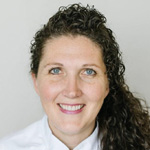
Presenter Information: Penny Hatzimanolakis, DHP(c), BDSc. MSc. EdD(c)
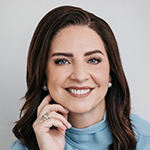 |
Penny Hatzimanolakis has specialized in periodontics and prosthodontics since 1994 and joined the University of British Columbia’s dental faculty in 2002. Currently pursuing a doctorate in Educational Leadership, she champions evidence-informed, proactive approaches to oral-systemic health. A published author and national speaker, she serves as an advisor on multiple industry boards. Through her centre, Elevate Oral Health and Learning Centre, Penny provides advanced training and inclusive, individualized patient-centred care, with a strong commitment to supporting underserved communities. |
Viva Learning is an approved AGD PACE Provider and California State Dental Board Provider of dental continuing education. Viva Learning strives to deliver balanced, objective and clinically relevant information grounded on scientific research. Lecturers who are invited to deliver Viva CE webinars are advised to substantiate their claims with research-supported data and to disclose all commitments to, or relationships with, any commercial entity within the dental industry. In many cases, lecturers are sponsored by a dental manufacturing company, which provides them with support in the form of honorarium and/or dental products and equipment in order to help with clinical presentations. Prior to each live CE webinar, lecturers are made aware of the importance of delivering their presentations without commercial bias, and where appropriate, to mention a variety of different product choices that may be relevant to the subject matter of the lecture, for the educational benefit of the participant.
Transcript
So if you want to do salivary diagnostics, this is something that you would now could introduce. Or
you can keep it as simple and straightforward of just saying, hey, you know what, this patient I
think is having a hard time buffering because when I disclose the patient, I see all this acidity
in the mouth. What's going on? Again, going back to why is what is being presented right now going
to help? me create an accurate diagnosis. And of course, then your plan and your implementation.
Welcome to Austin, Texas, and welcome to the Phil Kline Dental Podcast. I think we can all agree
that dentistry has become remarkably good at repairing disease. We restore teeth,
replace missing teeth, treat periodontal disease, and manage the consequences of oral disease every
day. But what if our greatest measure of success shouldn't be how well we treat disease,
but how effectively we prevent it from happening in the first place? Our guest today is Penny
Hatsimanalakis. She has spent decades thinking about and practicing dentistry in precisely this
way. Penny has specialized in periodontics and prosthodontics since 1994 and joined the University
of British Columbia's dental faculty in 2002. She believes that understanding the why,
the underlying risk factors that contribute to disease, can fundamentally change the way we
practice. Instead of waiting for disease to appear and then treating it, what if we could identify
risk earlier? intervene sooner, and practice truly proactive dentistry,
preserving our patients' natural teeth and tissues for as long as possible. So stay tuned for a
fascinating conversation about what success in dentistry really means and how a better
understanding of risk can help us move from repairing disease to preventing it. Before we get
started, I'd like to thank all of you for tuning in. If you're enjoying the show, please follow us
on Apple Podcasts and Spotify, and even better, leave a review. By doing so,
you're not only showing support for what we do here, but your reviews are instrumental in getting
more dental professionals to listen and benefit from our content. We really do appreciate it.
Joining us today from Vancouver, British Columbia is Penny Hatzimanolakis. She is a published
author and national speaker, and she serves as an advisor on multiple industry boards.
Penny, welcome to the show. Thank you. Thanks for having me. Yeah, we're very happy to have you on
the show. And before we get started with the questions, I do want to give our listeners a brief
overview of P4 medicine, because that is the foundation of our discussion today.
For those who may not be familiar with the concept, P4 medicine is a healthcare framework,
if you will, that envisions a shift from reactive disease treatment to a more proactive approach.
And the four Ps, I guess we should talk about them, in P4 medicine stand for predictive,
preventive, personalized, and participatory. And apparently the framework for P4 medicine,
a little trivia, was first described by Dr. Leroy Hood. He was a renowned molecular biologist out
of Seattle in 2008, which is actually not too far from you, Penny. That's right. It's a good three
-hour drive to Vancouver. And the whole idea behind this medical framework presents an intriguing
question for dentistry. What would happen if we applied those same principles of P4 medicine to
oral health? And that leads me to my first question. We talk about achieving predictable clinical
success all the time. You can't go to a lecture where a key opinion leader isn't showing slides
saying, you know, if you follow this protocol, this is going to give you the best odds of
predictable clinical success. So I think in large part, dentistry has become exceptionally good at
repairing damage. But my question to you is, Penny, how are we doing? as a profession if our
primary measure of success was how much disease we prevented in the first place Yes,
very great question. And I would challenge the premise of what we currently call success.
So just like you mentioned, dentistry tends to measure what is easy to count, restorative place,
follow this protocol for implant predictability, what type of pockets do you have,
so on and so forth. But those are largely treatment outcomes. And what we don't routinely measure
is how many restorations did we prevent? How much attachment loss did we?
prevent how many teeth remained healthy because of something we did so i think if you were asked
yourself or any of your listeners and you say okay what was my success percentage rate and you
would have to we don't really measure that but if you were to take an estimated guess you'd
probably be around maybe 10 15 percent if you went to a surgeon and you said you know what is the
success rate and they said 10 to 15. i'm not sure you'd say you know sure doc go ahead i think
you'd say uh thanks but no thanks so this really challenges the definition of success dramatically
and i think what the important distinction would be prevention isn't the same as telling someone to
brush and floss it really is about trying to understand the why the disease happened in the first
place for that particular person and not just kind of do a general you know,
here's your disease, here's your classification, here's the therapy. I also want to make it very
clear that prevention is not anti-treatment. And that's a big message we have to make sure that
that gets weaved through in our conversation. Yeah, and that's what I wanted to ask you about that.
It's like very challenging to present this idea to a dentist who just spent a complete fortune
going through college and dental school. is raring to go chomping at the bit to go out there and
practice on real people the things they learned in dental school. And then, you know,
they're coming out now, these dentists, in an era where we are making progress with minimally
invasive dentistry. I mean, that's taught ad nauseum. We're getting into more conservative
methodologies with our tooth preparation because we have... adhesive systems that preclude the need
for mechanical retention. So we are making progress. But for someone like you,
and I'm retired, so I'm 100% in agreement with what you're teaching. But when you're talking to a
dentist and you're saying your goal is to maintain oral health and perform the minimal amount of
dentistry necessary to achieve that goal and look for clues that say this patient is heading down a
path in this direction and we're going to circumvent all those issues, which would eliminate a lot
of treatment. Now, that's also going to eliminate a lot of revenue. So as a dental practice owner,
how do we balance all this? Excellent point. And it's really about understanding that difference.
Because if we look at the statistics in the UIC,
specifically when it comes to periodontal disease, there's...% of the population has disease,
so treatment is going to be necessary. We cannot control the disease process for anyone.
We have cancer research going billions, trillions of dollars. We still have not stopped,
right? But the goal is, because in my opinion, this is all about a risk management situation.
We cannot necessarily say someone's going to have X or Y, but what can we put in place to be able
to look at the future because i think we focus more on the reactive of patient comes in we do
assessments we say you have this disease then we jump right into therapy which is what's going to
be needed for a lot of patients. But then going forward, how do you then continue that patient and
not do a wash and repeat, but more be about, okay, now let's understand your risk.
at this point in time in your life and let's just see if we can minimize that because i think
people if you look at the wellness industry it's a trillion dollar industry people will pay for
prevention and promotion versus the treatment and if we look at implants you know who wants to
spend that kind of money to have the implant when it's needed it is needed it will always be needed
right but how do we change the focus i think that's a great point penny that Once you stabilize the
patient and do the things you need to do to get the patient in a functional state where the oral
health can be maintained, disease is under control. And then you can focus at that point on
identifying risk factors that are causing all this in the first place. And that's the why. So
that's going to reduce the amount of dentistry needed down the road. And I think that's what your
main point is. Where did you get your background in perio? Because that is your expertise. So from
the university perspective, it's, you know, I'm with the graduate students. I've been at the
University of British Columbia for over 20 years. Research, the graduate students have to do a
master's while they do their degree in periodontics. And then, of course, also at the university,
we have multiple disciplines in pros and ortho. So we're constantly working collaboratively.
So a lot of the cases that come, it's not just a silo of, oh, it's just perio, it's just ortho,
it's just pros. And then my practice is based on more. It's a center for everybody.
My youngest client is four years old and loves GBT guided biofilm therapy.
And the oldest is 98 and just recently got an implant. So, again,
it's very customized to the individual. And that's where I feel I can say, honestly,
as a practice owner, you know, for the dollar perspective of profit,
it preventative is really. a way to go. Yeah. So it's the best thing for the patient and it
certainly makes the healthcare provider feel good about themselves. But I'm really glad that you're
pointing out that preventative dentistry can be profitable and we don't need to do aggressive
restorations and all the things we've talked about earlier if they're not absolutely necessary.
And we need to focus on planning to kind of avoid a lot of those treatments. But I'd like to talk
about one preventative protocol that I actually had done to me, which is GBT,
guided biofilm therapy. I had it done by a dentist here in Austin, Texas, and I was really
impressed with it. The whole program makes sense. It's based on everything you're talking about,
which is prevention, but it's a treatment in itself because it comes with a machine and everything
else. Tell us about GBT. So guided biofilm therapy or GBT is a protocol that is grounded in
science. And it is to support, let's say, a practice, whether it's a general practice or a
specialty practice, really a breakdown of they call it eight steps to which can allow someone to a
clinician to. And then, of course, then you've got calibration amongst all of the clinicians that
are in the practice. So the patient is hearing the same story and, you know. protocols and
procedures. And the beauty about GBT is that it takes this concept of minimally invasive that you
mentioned earlier, and then it also allows these protocols to think about being the p4 so if you
took the p4 concepts that we that you explained earlier and then gbt8 protocols you can see that
they're meshed together so where you want to be preventative or predictive they are aligned with
each one of these protocols and it's really a great mixture of both so therapy because you have the
mechanism to do the biofilm disruption which is the etiology to disease and then you have the
concepts of in your assessments which is obviously your first step, then you start to think about
what are the things that I need to be able to identify what's going on with this patient at this
particular moment. Because three months from now, six months from now, we don't always stay the
same. Our health trajectory doesn't stay the same either. So today, currently, what's going on?
So in the sense of now doing prediction. So now you can really take this protocol and go as deep as
you think would be ideal for your practice. So if you want to do salivary diagnostics,
this is something that you would now could introduce. Or you can keep it as simple and
straightforward of just saying, hey, you know what, this patient I think is having a hard time
buffering because when I disclose the patient, I see all this acidity in the mouth. What's going
on? Again, going back to why is what is being presented right now going to help me create an
accurate diagnosis? And of course, then your plan and your implementation. So just to be clear,
when you're talking about GBT, you're talking about a device, guided biofilm therapy device, but
also the whole protocol behind it or that goes with it. You're using this tool while understanding
other factors that are involved with the progression of the disease and stabilizing it.
Now, something that's really interesting when it comes to prevention, especially in the perio world
and the... the dental hygiene departments of general practices and also per dental offices, we've
been telling patients for generations, see in six months, referring to the two dental visits per
year. But there is actually a fascinating question here. Where did the six months timeframe
originate? And the reason why I'm asking this is because, you know, we're talking about making
these treatments precise to the patient. But meanwhile,
everybody's told. see in six months. And again, a little bit of trivia, which I like to bring on
the show, believe it or not, one of the earliest documented references to visiting the dentist
twice a year appeared in a Colgate toothpaste advertising booklet around 1922.
Most of us were not alive then. At least I wasn't. I don't think you were. I don't think you were
either, Penny. And by the 1940s and 1950s, Toothpaste companies were heavily promoting the same
message. Brush your teeth twice a day and see your dentist twice a year. So are we really
practicing prevention based on the patient's individual risk factors or are we still following a
schedule that was at least in part created by Madison Avenue? Yes, we're still,
unfortunately, that is not, and it's not evidenced in form decision making either.
There is no science behind seeing a dentist, you know, twice a year. Is that going to ensure that
you're not going to have disease? No. Brushing twice a day? No. So the only thing,
and I think there was one more thing on those advertising was nutrition. which is the only thing
that's grounded in the science. Well, I mean, it's like if you took a low-risk 70-year-old
patient and then you took a high-carriage-risk 30-year-old patient, are they necessarily going
to be on the same recall interval? No. Absolutely not. Absolutely not. So when do you think it's a
good time to establish that recall protocol for an individual patient so that you can really move
into precision prevention? I think the caveat here would be you would start to think about risk
-based care, right? That's kind of like the language I think we should be helping our patients
understand and our future clinicians to understand. And it doesn't, you know,
it's not a perfect algorithm either, right? So we're still trying to review the literature, as we
just said, we don't. have necessarily we know for sure that when we have a shorter interval for
example with implants so that seven-year-old if he does have implants then we may want to but
again there is no set interval for that maintenance it really will depend on all the other risks
factors and or assessments that we're doing to be able to give us so rather than saying everyone
should have individualized recalls I think we should stop pretending that there's one interval is
equally appropriate for everyone while acknowledging that our ability to precisely calculate the
ideal interval is still evolving. And it's really going to be based on to that individual at that
point in time to help you make that plan that you're supposed to create. Yeah,
no, it sounded a little bit circuitous, but I understood you. When I talk to periodontists, they do
tell me that they encourage certain patients to come back every three months.
But I think that anything more frequent than that is not practical in a lot of patients' lives.
They can't come back every 30 days to come to the dentist for whatever reason, whether it's work,
cost, time, whatever it is. Three months seems to be the most aggressive time frame that I hear
periodontists are prescribing to their patients or encouraging to their patients. What's your
feeling about that in your practice? Are you getting resistance from patients when you let them
know that they have a fairly progressive situation or an active disease process that needs to be
managed more frequently? Do they resist coming back every three months? I think it's a mixed in the
population. I'm lucky for where my location is. So I'm very mindful of the privilege that I have to
work where I do. However, in that there is also a lot of understanding because we take the approach
of I'll call it periodontal medicine. That's kind of how I explain it to the patients. So they
understand that the oral health and their overall well-being is connected. And so for some
individuals who are going through some. treatments the recommendation would be how do you feel
about me supporting you through this process and I don't get resistance because they understand
what we're trying to achieve but the three months is an average again there is no science that's
going to say it must be three months for some individuals it is two months and for some it's one so
again you're customizing it again keeping in mind as what you intelligently just said it's not
always realistic for individuals to come in on that frequent on that frequency but i don't also
don't want us to be pinholed to you have periodontal disease therefore you miss you must come in
every three months that's not you know, what we're trying to retrieve. Right. So your approach to
the patient is that you're partnering with them and you're doing this together because a lot of
times when the patient finally ends up in the chair of a periodontal practice, they look at
themselves as a periodontal failure. They look like, okay, my GP did everything they could.
They seemed optimistic. I had a great hygienist over there. And then they're just like, you know,
raising the white flag and saying, you know, Mrs. Jones, we love you, but We can't help you
anymore. It's kind of unfortunate and kind of sad because maybe Mrs. Jones was doing quite a lot at
home and she was actually complying to the best of her ability with the instruction she was getting
from the GP on how to keep her periodontal health as optimal as possible. But she ended up in the
periodontal practice. How do you deal with that kind of patient? How do you get them out of that
mental state of feeling like they're a failure and they're destined to lose all their teeth anyway?
Yeah, great question. And it's really close to home for me because the very first thing I say to
patients is, I'm not your judge, I'm your coach. And I'm like, did you forget to read the sign
before you walked into the operatory here? We really try to emphasize to them that you're here
because you need the support, just like an expert golfer needs a coach. Just like,
you know, all of us need support in all these domains. And thank goodness that your general office
has cared for you as much. they have and they want the best for you and we have different tools
just for example gbt if they don't have that machinery then that's a difference for that individual
patient so they really get to understand that participatory part in the p4s is pivotal in my
opinion and the research would support as soon as you have the the patient on board and
understanding what's happening the success or the outcomes are going to be even that much better at
this point, because they also come in maybe feeling as a failure, as you said, but they're really
looking at us to say, oh goodness, okay, this is the last point before X will happen.
Yes. Yeah, that's true. So with your experience, Penny, do you see noticeable changes,
distinct changes in the health of the periodontium of the patient that's referred to you by a
general dentist when you use GBT? Changes that... excites you yes not only in the protocol because
again as we said earlier we start with assessment it allows us to dive potentially do more risk
assessments to be able to try to understand what's happening we have the disclosing solution here
this is what they see it and again you use motivational interviewing skills you know would you like
to see you know yes i want to see and then they see all the purple in their mouth and of course are
mortified and reinforce the fact this is no judgment here we're here to help you may not get it on
the first go but that's why we're here working together and then you know you start talking about
things like nutritional counseling all these things that we learned in our education but we don't
put into use as best as we can for multiple reasons there's no judgment here on gps or any other
practice there are real barriers there but then going back to gbt that and then you're before you
even picked up a hand instrument like a scalar and ultrasonic you really have a good understanding
of what's happening with your patient and then the protocol itself with the machinery now the
equipment then yes you can get access and you know when you're using erythritol powder that's
implementing and changing the aura flora. So yes, there's definitely improvements, especially with
implants. So I do want to get back to the principles of P4 medicine and how they relate to
dentistry. In fact, you proposed a fifth P to this framework,
an additional P, and that is preservation. And I think more and more dentists today are talking
about preserving tooth structure. So do you think preservation will become the overarching goal of
this new model? and this all goes along with preserving quality of life for as long as possible,
what would a truly preservation-focused dental practice look like? Yeah, so...
yeah, for my lens as well, it's more about preserving, right? The root structure in particular,
you from the inside, me from the outside. And like you said earlier too, in the education that we
have now and learning how to do restorative procedures, you were trying to be minimally invasive.
I think that's the buzz term. So again, preserving of the biology, right? It's don't unnecessarily
remove healthy tissues. And so... How do we do that? Whether it's a hand instrument,
an ultrasonic, having the patient do their oral self-care, you're preserving the natural
gentition. Don't just jump to replace. There's a lot of cases, a lot of infrabony defects.
Patients have had consults. It needs to be extracted. We do what we do.
In a non-surgical way, hygienists can grow bone, especially in an infrabony defect.
as possible. Going back to, I guess, maybe periodontal health, don't wait until the attachment has
been lost. Try to figure out why the recession or non-CCLs are happening. What about
periimplantitis? In the US, for instance, patients over 50, we're looking at 8% of them have at
least one implant. Are you seeing a change in progression in periodontal disease?
Because these implants don't have a PDL, they don't have the resistance to bacteria and
deterioration that a natural tooth would have. How are you seeing that and how does that fit into
this 4P or even I should say P4 or P5 framework?
Yes, very much so. Because again, anytime we have implants, we have to be very diligent in our
assessments. So if you're using guided biofilm therapy, even if you don't have the machinery,
you can still use the protocols and the concepts. And you'll be way ahead to be able to identify
things that are potentially happening, which of course, with implants, this is our main concern.
Early detection is the key to success. Although I can take up to five years to start to notice some
challenges. with some implants but definitely this is when we think about the p4s uh or maybe the
p5s um now we're trying to say okay success right do we want success we want survival what is the
key here with implants i mean we don't just want something to be even with natural teeth we don't
just want a tooth to be there present we want it to be in function we want it to be able to support
quality of life we want it to support in eating and and so on and so forth for the longevity or the
health span of that individual right so the p force and gbt mixed together is the great combination
to be able to support in helping in reducing when it comes more potentially from Well,
I would actually say from both venues, because biologically, we know one of the etiologies of
implantitis, so on and so forth, more since the biofilm from that perspective.
But then we also have the planning and everything that goes before. So with the concept of your
assessments, before you place an implant, you really should be assessing whether or not they are
good candidates for an implant. That's a really important point. And that includes the medical
history of the patient, what drugs they're taking. Because as you go through that medical history
and you identify risks, and then you start to pile these risks on top of each other,
and then you still go ahead and do the implant. And that could be a choice that... could be the
right thing to do for that patient at the time, but the patient needs to know what they're up
against. And so does the clinician because the surprise later on when they start to see a peri
-implantitis, the rapidness, the speed in which that implant deteriorates happens much faster than
a natural tooth. So this goes along with your prevention and also identifying high risk.
And that was the beginning of this podcast episode. We talked about how important. It is. Now,
we have AI tools now. Do AI tools help you with any of this using whether it's CBCT,
where you can highlight the beginning of pocket formation? What are some of the things that you
could pick up using more sophisticated technology in prevention? And it also ties back to...
preservation of the patient autonomy i see a lot of treatment plans i call them care plans but
treatment plans that patients cannot realistically maintain and so then if we don't have this
information to be able to support a patient along this healthspan journey we're potentially
hundreds of people are walking around thousands of people are walking around pre-diabetes and we
know the relationship between diabetes perio and implant so they're at a 50 risk of again it's a
risk it's not a causation of having peri-implantitis if they are type 2 diabetes so all this
preservation in alignment now with potentially ai technologies could potentially help a clinician
pull this information together to my knowledge we don't have one great system yet i'm sure it's in
the works somewhere where it can pull all the data the restorative the perio so as far as i know we
still don't have the widening of the pdl so if anyone's listening out there that has that Yeah,
I mean, this is all predictive. I mean, this fits under predictive. Exactly. Yeah. And there's no
question, Penny, we are moving in that direction because as AI aggregates more and more data from
millions of cases, we're going to be available to all clinicians is going to be AI software that's
going to allow us to predict things that would just otherwise be almost impossible to do because of
so many different variables. But I think one of the challenges we have is that dental school is
four years. There's still some programs that are three years, believe it or not, but they're
actually the same amount of hours, but they're condensed into a three-year program. But in a
period of four years, with all the new technology that's coming out, and they still have to learn
the basics, for them to understand what you're talking about here, which is understanding the risk
factors and trying to plan ahead instead of what's...
thing to do for them to get out of the door while they still have insurance with their employer. So
the whole way we look at the way we treat our patients, we have to look at, I think the runway is a
little bit longer. We have to start thinking about, like you said, precision prevention and
preservation. So let me ask you this last question here and we'll wrap it up. And it's been a good
discussion. You make an important distinction between lifespan and health span. What does that mean
in dentistry? I think I would say lifespan is how long we live and health span is how long we live
in good health and function. So dentistry has historically focused heavily on tooth survival,
as we talked about, or implant survival or success, right? But surviving isn't necessarily the same
thing as a healthy dentition. right if you have the 85 year old who technically has 24 teeth but
has poor chewing you know xerostomia complex restorations pain did we achieve success right now
that's that's a very good point um yeah because we do you know we look at what the insurance
company defines as a success and they say well a composite that lasts for five or six years is a
success because then they pay for another composite after that although many dentists are getting
many more years than five um but you know that's a good point i mean we we could only do the best
we can yes and it depends on the patient and dentistry is a very overwhelmingly difficult
profession in so many ways regulatory hr paying the bills managing people you know it's just tough
It is a very difficult profession. There's just a lot we're learning now. And I think the
profession is moving towards preservation more than ever. And I think a lot of that had to do,
as far as restorative work, the adhesive systems we have. And just in endodontics alone,
we're learning a lot more about vital pulp therapy, which is actually doing pulpotomies and partial
pulpotomies on mature teeth. Now, when I was in endo school, that was... heresy nobody did that
when you had a carous exposure that basically implied that bacteria was introduced into the pulp
and the pulp had to be removed and we're talking about pulpectomy and obturation and now we're
preserving tooth structure by not doing the root canal all the time on a vital case and we're
actually especially taking a high-speed burr with water and taking two to three millimeters at a
time of pulp tissue away until we can get some form of hemostasis. And then we put a calcium
silicate-based hydraulic cement over that, and we just avoided a root canal on a patient, which
cost a lot of money, not to mention the additional cost of restoring the tooth using an indirect
restoration, which is not uncommon after endodontic treatment. So I think we are making
advancements. in the concept, but I think people like you, having people like you around that are
teaching this and using the kind of tools, for instance, guided biofilm therapy and the whole
protocol that goes with that device is very, very hopeful that we're moving in the right direction.
Any closing thoughts before we wrap it up? Yeah, well, I think you summarized it quite well there
with the overall, when you look at all the disciplines and where each discipline is trying to be
minimally invasive, rethinking their protocols. And the whole goal for everybody is really
shouldn't simply to be to help people keep their teeth or implants. It should be to help people
keep a healthy, functional dentition for as much as their lifespan as possible.
I think that would be the ultimate goal. Yeah, amen to that. Penny, thank you so much.
Keep doing the great work you're doing at University of British Columbia. Yeah,
British Columbia. Okay. Good luck to you. And thank you so much for being on the show. Thank you
for having me. It was a great pleasure.
 Episode 805. Risk Is the New Diagnosis: Rethinking How We Practice Dentistry
9/21/2026 - CE Credits: 0.5 CEU (Take Exam)