



| Dental Podcast Episode - The Dr. Phil Klein Dental Podcast | Listen on: |

|

|

|

|
and others. |
Episode 311: Bonding vs Luting: What's the difference and why does it matter?
 |
Disclaimer
Viva Learning LLC sites offer content that include opinions, techniques, recommendations, etc. from a variety of writers and speakers that are not necessarily endorsed by Viva Learning LLC, its associates and sponsored Viva Affiliates. Viewers are responsible for verifying the validity, accuracy and relevance of all content before implementing any techniques, products or recommendations into their clinical setting. Viewers understand that Viva Learning LLC, its associates, writers, speakers and sponsored Viva Affiliates are not in any way responsible or liable for any adverse events that may occur (i.e., in a clinical setting or anywhere) based on any information disseminated from Viva Learning LLC sites, including all Viva Learning sites.
The copyrights and other rights to the slides and video contained in a webinar posted on this website are owned by the speaker, Viva Learning LLC, and/or the sponsor company and/or its subsidiaries worldwide. Viewers are only authorized to view the content of the webinar (live and archive) at this Website and are not permitted to screen capture, record and/or download any content displayed in this webinar. You may not make any part of this Website available as part of another web site whether by hyperlink framing on the Internet or otherwise.
The copyrights and other rights to the audio contained in a Viva Podcast are owned by Viva Learning LLC. Viewers are authorized to listen to the content of the podcast and are permitted to download any podcast for personal use only. You may not, however, make any part of this Website available as part of another web site whether by hyperlink framing on the Internet or otherwise.
By signing up for a free webinar and/or podcast you give Viva Learning LLC and/or its Viva Learning Affiliates permission to send you emails alerting you to future CE opportunities and e-learning content.
California State Dental Board Provider Statement
Viva Learning is a registered continuing education provider in the state of CA. Dental Board of CA Provider #RP 5747. Approved through 6/30/2026
Questions regarding our Conditions of Usage, Privacy Policy, or other policy related material can be directed to our support staff by clicking on the "Support" link or you can email us at: support@vivalearning.com.
Approval does not imply acceptance by any regulatory authority or AGD endorsement.
Approval period: 11/1/2025 - 10/31/2029. AGD Provider # 217544
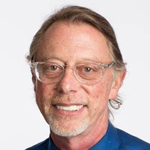
Presenter Information: Dr. Alex Vasserman
| Dr. Alex Vasserman practices minimally invasive painless dentistry and pride himself in maintaining that reputation. As a cosmetic dentist he strives to make sure that his dentistry looks great, feels great, lasts a long time and is painless. In 2006, after receiving his masters degree in Graduate Medical Science, Dr. Vasserman attended Boston University School of Dental Medicine and immediately there after he began a residency program at Wyckoff Heights Medical Center. In 2013 Dr. Vasserman started his own practice in Midtown East, New York City. The practice is now located on Lexington Avenue between 69th street and 70th street on the Upper East Side, New York City. In order to keep his expertise current Dr. Vasserman continually partakes in continuing education seminars, workshops, live patient hands-on courses and study-clubs. Dr. Vasserman is a member of the American Academy of Cosmetic Orthodontics, The American Dental Association, The New York State Dental Association, The International Congress of Oral Implantologists, and SPEAR continuing education faculty club. |
Viva Learning is an approved AGD PACE Provider and California State Dental Board Provider of dental continuing education. Viva Learning strives to deliver balanced, objective and clinically relevant information grounded on scientific research. Lecturers who are invited to deliver Viva CE webinars are advised to substantiate their claims with research-supported data and to disclose all commitments to, or relationships with, any commercial entity within the dental industry. In many cases, lecturers are sponsored by a dental manufacturing company, which provides them with support in the form of honorarium and/or dental products and equipment in order to help with clinical presentations. Prior to each live CE webinar, lecturers are made aware of the importance of delivering their presentations without commercial bias, and where appropriate, to mention a variety of different product choices that may be relevant to the subject matter of the lecture, for the educational benefit of the participant.
Transcript
Welcome to the show. I'm Dr. Phil Klein. Today we'll be discussing the difference between
bonding and looting in the materials used for each of these procedures. Our guest is Dr.
Alex Vasserman, a cosmetic dentist who practices minimally invasive painless dentistry in the Upper
East Side of New York City. He is an active member of several dental associations, including the
American Academy of Cosmetic Dentistry, and COIS-trained dentist. Dr. Vasserman,
thanks for coming back and joining us on Dental Talk. Thank you so much for having me back. Yeah,
so we had a very interesting podcast for those of you who are interested in particle abrasion, how
it actually strengthens the material, even helps with hypersensitivity or post-operative
sensitivity. And Dr. Vasserman talked about the types of air abrasive materials that he uses.
and the instruments that he uses so we talked about the particle size and so forth so tap into that
podcast anytime you feel you're interested in learning about particle abrasion today we're going to
be talking about bonding versus looting so to begin let me ask you this simple question what is the
difference between bonding and looting for our you know just clarification before we get started
and why is it important for us to understand this as clinicians so bonding versus looting depends
on whether you're using bonding agent think of it that way and the way that I look at it is whether
you have enamel or you don't have enamel if you have enamel you could bond to it if you don't have
enamel you need to use the older principles of dentistry which is the cohesive dentistry where
you're getting your restoration to grab onto the tooth versus simply using bonding agent and resin
cement in order to get that adhesive bond. So it's adhesion versus cohesion,
whether you're getting a gluing effect like bonding agent or whether you're getting that mechanical
retention. Right. So in the old days when we used zinc phosphate, that was obviously strictly
looting, right? There was no real bonding process going on. Exactly. Are you implying that dentin
itself is not bondable? Like, can we get an effective bond to dentin,
or are we looking at that as a looting procedure if there's just no enamel present? You can bond to
dentin. However, certain studies have shown that because of the MMPs,
metalloproteases, that bond degrades up to 40%.
after 12 months. So yes, initially, there are people like Pascal Manier that activate that bond,
that do what's called bond seal. And they claim and they do show that yes,
you can bond to dentin successfully. However, there are other studies that do show that that bond
degrades because there's water inside dentin. There's metalloproteases that degrade the bond.
So I personally do not trust that bond strength for a long-term bond.
That's why you'll find that veneers, if you start to show through that enamel and you're getting
into that dentin, I will typically go then into my cohesive protocols in order to get extra
strength. I'm not solely relying on adhesion because most likely you'll get a phone call that that
veneer popped off. So you're also a fan of selective etch.
Yes. Could you explain that to us a little bit about how that differs from total etch just very
briefly and how that follows your viewpoint as far as... you're not completely thrilled with the
confidence factor when it comes to bonding to dentin. So when I'm looking at the restoration and
I'm seeing, let's say it's a posterior tooth and I'm seeing a big ring of enamel,
I will go adhesion and I will etch only the enamel ring and I will bond to that enamel.
However, if I'm not seeing that enamel ring, I'm relying on my six degree of taper.
I'm relying on four millimeter ferrule, at least two millimeter to structure in order to get that
cohesive restoration to grab. Bonding agents are very important.
And some of them claim that they do get a bond strength. And yes, you will get a bond strength.
initially. Bonding agents like 3M has a great bonding agent.
I personally love All Bond Universal from Bisco. It's a great bonding agent because it has the MDP
in it, which has been shown to bond to dentin. However,
over time, the bond does seem to degrade. So tell us about the clinical process.
So you have a tooth, you have this ring of enamel. that you are going to utilize because you know
you can get certainly a bond to that. How do you prepare the tooth and what materials do you use
typically to cement in an indirect restoration under those conditions? So my protocol is this.
I always work under a rubber dam, whether I'm preparing a tooth or I'm cementing a tooth.
Once I take out... the old restoration that's in the tooth whether it's an old amalgam or a big
composite i evaluate how much of the walls i have left i typically then flatten those in order to
utilize as much enamel as possible i'll bevel that enamel and when the restoration comes back
either cad cam after i take an impression or scan i will then particle abrade the entire tooth i
will etch only the enamel i will then bond typically i will use all bond universal because it does
have the mdp in it which increases the bond strength to dentin i will silenate my emacs and i will
use some kind of a resin cement i use the one from bisco and then again i will then cement my
restoration right over the top. I will tag cure it, clean up the cement,
put some kind of a glycerin over it in order to, so it doesn't polymerize the air inhibiting layer.
And I will cure through that for about 20 seconds, adjust my occlusion and floss the contact.
So on the selective edge part, you stay away from the dentin, but... to that,
you use the particle abrasion for all the services that are involved. That's right. That's exactly
it. I do not edge dentin, but I particle abrate everything and then I bond everything.
Typically 20 seconds of vigorous scrubbing with my All-Bond Universal. Very,
very lightly. Just use a little bit of the air to kind of move. I have a separate line that doesn't
have the water in it. It's just air. And I will move that bond around, hit it with the light for
about 10 seconds, and then go through my bonding protocol. Right. So you're getting a bonding
result on the enamel. But even though you put a bonding layer on the dentin, you didn't etch it,
but you did particle abrade it. You look at that as a looting process? I'm not really. relying on
that bond strength to dentin. If I get any that lasts more than a year or two years just from the
bond, it's a plus. I'm primarily relying on that enamel bond.
Thank you for that very clear description of the actual clinical technique. So what are the two
materials that you're using as far as bonding and cementing? So I used to use...
All sorts of materials, but typically right now I found myself using more and more of Bisco's All
Bond Universal. And then I will use the Bisco resin cement.
It's called Dual Link. It's a great cement. And I'll put that into the crown or the onlay.
I'll seed it over, tag cure it for about 20 seconds. First,
I'll tag cure it, clean up the cement. use my glycerin, and then cure it for about 20 seconds on
all the sides. And what happens when you have a tooth that you're restoring that has practically no
enamel on it after it's prepared? In that situation, you rely on those dental school principles,
the six degrees of taper, four millimeter ferrule,
at least two millimeter tooth structure. If all of those things meet, then it really doesn't
matter. what you use. I mean, we've been using zinc phosphate forever. In my practice,
I will use either, I will particle abrade it once I have that perfect prep,
that retentive prep. I will particle abrade it and I will use either Reliax Unisem or the Therasem
from Bisco. Both of those work really well because they do have the MDP in it.
Again, because I'm not relying on that Denton bond, I'm more relying on the cohesive principles.
Anything works. If you want to go through your bonding principles, Arabraid,
bond, at that point, I will then go to my Duolink, which is the resin cement from Bisco,
if I want to try to get a Denton bond. Before we wrap up this podcast,
Dr. Vasserman, can you go over bonding to zirconia? Or is it possible to get a good bond from
zirconia? It is. There are certain studies that have shown that the bond strength to the zirconia
increases with MDP. MDP is found in some bonding agents like All Bond Universal,
3M's bonding agent has it. But you want it in a high concentration.
You almost want a pure MDP, which is the Z prime from Bisco.
It's a great product. You paint it on the intaglio. After you roughen the surface,
you paint it on the intaglio of the zirconia. You scrub it, and then you just leave it alone.
You don't cure it. You don't dry it. I just kind of leave it there.
Then I bond the tooth. selective edge enamel, I particle abrade everything.
And that has been shown, that protocol has been shown to increase the bond strength by almost three
times versus not using the MDP. So yes,
certain studies have shown with the use of MDP, the ability to bond to zirconia.
Are you using zirconia primarily for posterior EMAX for? anterior and bicuspids?
I am mostly using Emacs everywhere. I feel like the strength of Emax is very strong.
It's 400 megapascals of strength. So yeah,
I use Emacs almost all the cases except for very heavy clenchers,
people that have a lot of parafunction that I can't control. I will go with zirconia.
My implants, because Soft tissue likes zirconia.
Most of my implants have polished zirconia underneath the restoration. So I will go monolithic
zirconia on most of my implants, unless it's in the aesthetic area.
Again, Dr. Vasserman, very, very good podcast. We appreciate how articulate you are in describing
these clinical techniques. You certainly make it easy for us to understand. And it's interesting to
get your perspective on how you treat dentin and enamel completely differently, where some
dentists, they believe in dentin bonding as more of a long-term result. And I guess the studies
are backing up what you're saying as well. So we'll have to see what happens with that going
forward. We'll look forward to more podcasts. I know you're doing one on endo versus doing root
canal versus vital pulp capping. And that's going to be interesting. And we look forward to that
one. And you're going to do a whole podcast going forward. on zirconia versus emacs which is going
to be good too so thank you very much for your time and talk to you soon thank you so much thank
you for having me
 Episode 793. Mastering Porcelain Veneers: From Digital Wax-Up to Post-Insertion Visit
8/10/2026 - CE Credits: 0.5 CEU (Take Exam)
Episode 791. The Latest in Composite Dentistry: Universal Composites, Bonding & Clinical Pearls
8/3/2026 - CE Credits: 0.5 CEU (Take Exam)
Episode 736. Doing More with Less: Restoring the ‘Hopeless’ Tooth with Composite
1/19/2026 - CE Credits: 0.5 CEU (Take Exam)
Episode 726. The Power of Passion and a Great Mentor: A Young Dentist’s Rise to Fee-for-Service Success
12/8/2025 - CE Credits: 0.5 CEU (Take Exam)
Episode 723. Clear Aligners in General Dentistry: Opportunities and Challenges
11/24/2025 - CE Credits: 0.5 CEU (Take Exam)